In this article
Every admissions season the same poster floods Pakistani feeds: a logo, a list of ten programmes, "Admissions Open" in red, and three phone numbers. Parents scroll past dozens of them. Admissions marketing in Pakistan does not fail because institutes are invisible. It fails because every institute looks identical, and nothing gives a student a reason to message this one today.
We run admissions campaigns and social media for Al Shifa Educational Complex in Multan: its BS-IT and BS-CS programmes and its IT and professional skills institute. Across 8 Meta campaigns pointed at Messenger and WhatsApp, those ads started 5,576 admissions conversations with students and parents, at about $0.08 each. One campaign alone brought in 3,844 chats at $0.04 each. Here is what we built, why it worked, and the school admission campaign ideas I would use for any school, college or academy.
The campaign, in numbers
Lifetime results read from Meta Ads Manager on 23 October 2026.
Quick answers
What is the best way to run admissions marketing in Pakistan?
Run Facebook and Instagram ads that open a WhatsApp or Messenger chat, not ads that chase likes. Give each programme its own creative with one clear offer, such as a scholarship, and have someone ready to reply fast. For Al Shifa that approach started 5,576 admissions conversations.
How much does a Facebook ad cost per admissions enquiry in Pakistan?
It depends on the offer, the audience and the creative. Across Al Shifa's 8 campaigns, the average was about $0.08 per conversation, and the best campaign, built on a scholarship offer, came in at $0.04. Grip Institute, another education client, got 109 enquiry conversations at $0.07 from the very first ad we ran for them.
What should an admissions post include?
One programme, what it leads to, the one reason to apply now (a scholarship, a closing date, a new batch) and a way to message. If a parent cannot understand the post in three seconds on a phone, it is carrying too much.
1. Pick conversations as the goal, not likes
The first decision on any admissions campaign is what the ads are for. A like on an admissions poster is worth nothing. A parent asking "what is the fee for BS-CS, and is the scholarship still open?" is worth a great deal.
So every Al Shifa campaign was set up with one goal: start a conversation on Messenger or WhatsApp. That changes everything downstream. The creative ends with a reason to message, the audience is chosen for people likely to apply, and the report shows one number: conversations and the cost of each. This is the same goal-first approach we use for every Meta ads client, from solar brands to restaurants.
It also suits how families in Pakistan actually decide. Nobody enrols in a four-year degree from a poster. They ask questions first, often a parent on WhatsApp, and they want a human answer. A chat is the natural first step, and the ad should make that step as easy as possible.
2. Lead with the offer that answers the real worry
The single best campaign, 3,844 conversations at $0.04 each, was built on a scholarship offer. That one campaign brought in nearly seven of every ten conversations across all eight.
That is not a coincidence. For most families, the question behind every admissions decision is cost. Al Shifa offers scholarships for merit and financial need, with up to 100% available on the BS-IT and BS-CS programmes. Putting that front and centre answers the biggest objection before it is asked, and gives the student a concrete reason to message today rather than "later".
The lesson for any institute: find the one thing that removes the main worry, and make it the hook. It might be a scholarship, an instalment plan, a university affiliation or job placement. Whatever it is, it belongs in the headline, not in small print at the bottom.
3. One programme per creative
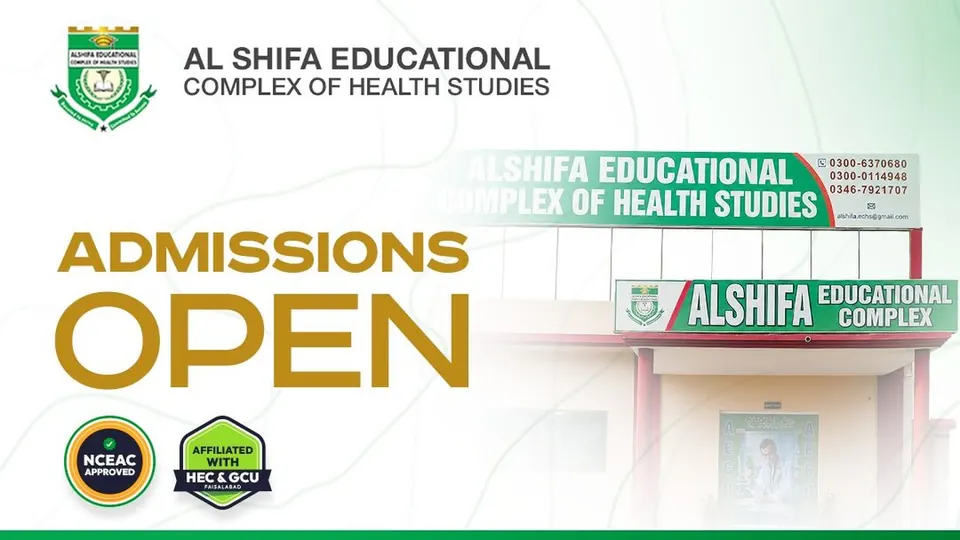
The posters we designed for Al Shifa each do one job. The BS-IT poster is about BS-IT: the programme name huge, "Information Technology" under it, the scholarship line, two short points (a high-tech computer lab and qualified teaching staff), the university affiliation, the batch, and the phone numbers. A student who wants IT knows in a second that this post is for them.
When we needed to show both degrees at once, the layout split cleanly in two: BS-IT on one side, BS-CS on the other, each marked as a 4-year programme with the scholarship line under it. The skills institute got its own creative too, grouping its courses into an advance skill programme (freelancing, digital marketing, AI tools), a basic skill programme (MS Office, professional skills, freelancing platforms) and a major course in graphic designing.
Separate creatives also make the data useful. When each programme has its own ad, you can see which one students actually ask about, and move the budget there. One poster listing everything tells you nothing.
What every admissions post needs
The checklist behind the Al Shifa creatives.
4. Show proof that the institute is real
Parents are cautious, and they should be. Before they trust an institute with years of a child's education, they look for signs that it is established. So the Al Shifa creatives carry proof, not adjectives:
- Affiliation. The BS posters show the affiliation with GC University Faisalabad in the top corner, next to Al Shifa's own logo.
- Approval badges. The NCEAC and HEC and GCU affiliation badges sit right under "Admissions Open".
- The campus. A photo of the building and its sign, so parents see a real place they could visit.
- Local detail. The campus address in Urdu at the bottom, the way local families describe the location.
None of this is clever. It is just honest, visible proof, and it answers the questions parents ask before they ever reach a counsellor.
5. Mix posters, student videos and a creator
Posters carry the facts. Video carries the feeling. Alongside the admissions and scholarship posters, the Al Shifa campaigns used student videos and a creator post.
A video with real students in it does something a poster cannot: it lets a young person picture themselves there. A creator post reaches people who do not follow the institute yet and would never stop on an "Admissions Open" graphic. Using all three formats also gives you more to test. In our process, new hooks go in every week and the budget follows whatever starts the most conversations at the lowest cost.
6. Keep the page alive between intakes
Admissions run in seasons, but trust is built all year. A page that only posts "Admissions Open" twice a year looks abandoned the rest of the time, and parents notice.
So between intakes we keep Al Shifa's feed active with content that is not selling anything, such as a 14 August Independence Day post that is designed with the same care as the admissions work. When the next intake opens, the page already looks established, and the admissions ads land on a profile that feels alive. This is the everyday side of social media management, and for an education brand it matters as much as the ads.
7. Treat every conversation as a lead, then reply fast
Here is the part no agency can do alone. An ad can start 5,576 conversations, but it cannot enrol a single student. That happens in the reply.
My advice to any school or college running conversation ads:
- Reply within minutes during the campaign. A parent who waits a day has already messaged three other institutes.
- Prepare answers to the top questions. Fees, scholarship criteria, timings, transport and documents come up again and again.
- Use a WhatsApp greeting that qualifies. Ask which programme they are interested in, so the right person answers.
- Track what happens after the chat. Which programme, which ad, did they visit, did they apply. That is how you learn what a conversation is really worth.
Admissions marketing in Pakistan: what to take away
- Set one goal. Conversations on WhatsApp or Messenger, not likes.
- Lead with the real offer. A scholarship campaign drove 3,844 chats at $0.04 each.
- One programme, one creative. It reads faster and tells you what students want.
- Show proof. Affiliations, badges and the actual campus beat adjectives.
- Use video and creators. Posters carry facts; students and creators carry the feeling.
- Stay active all year. A living page makes the admissions ads work harder.
- Answer fast. The ad starts the conversation; your team finishes it.
Before your next intake, check your setup with our free 12-point Meta Ads Checklist. Tick what you already do and see your score.
You can see the admissions creatives in our Al Shifa case study, and the full Meta ads results for all our clients on the Meta ads service page. If you are comparing agencies before your next intake, our guide on how to choose a digital marketing agency in Pakistan covers the questions to ask first.
If you run a school, college or training academy and want to plan your next admissions campaign, message us on WhatsApp. I am happy to talk it through.
Want this for your brand?
Video, brand identity, Meta ads and social media, made in-house by our team in Multan. Tell us what you are building.

Founder of Digital Lineup, a content production and digital marketing agency in Multan, Pakistan. Four years of brand films, Meta ads, identities and social media for brands in Pakistan and Australia.