In this article
Walk into any market in Multan and you will find ten shops selling nearly the same products at nearly the same prices. Open their Instagram pages and they look the same too: a phone photo of a box on the shop floor, a supplier's catalogue image with someone else's logo on it, a price written in red. Product photography in Pakistan is still treated as an afterthought by most retailers, which is exactly why it is one of the cheapest ways to stand out.
When products look alike, presentation decides which one feels premium. I have watched this play out across our studio work for a sanitaryware and tiles retailer, an electronics store and a battery brand. Here is how we approach product photography for a retail shop, with the real work behind it.
Our product work in numbers
From the Hamid Enterprises case study and our product photography service.
Quick answers
Does a small retail shop in Pakistan need professional product photography?
Yes, if you sell on social media, WhatsApp or a website. Online, nobody can touch the product, so the photo does all the selling. A retailer does not need hundreds of images. A clean set of packshots, a few lifestyle scenes and a couple of short product films are enough to make every post and ad look like one brand.
What is the difference between a packshot and a lifestyle product photo?
A packshot is the product alone on white or a seamless colour, shot at consistent angles for catalogues, marketplaces and price lists. A lifestyle photo places the product in a real room, a hand or a moment, so the buyer can picture owning it. Good retail content uses both.
Can brands outside Pakistan get product photography done in Multan?
Yes. Brands outside Pakistan courier samples to our Multan studio, approve the look on a test shot over a video call, and receive retouched images and short product films digitally, sized for their store and ads. We return the products after the shoot if needed.
Why most retail product photos fail
Most shops photograph products to prove they have them in stock. That is a different job from making someone want one.
Stock proof looks like this: the product on a cluttered counter, mixed lighting, a different angle every time, and the supplier's own image recycled because it was free. Every one of your competitors has the same supplier image. When a buyer scrolls past three shops posting the same picture, the only thing left to compare is the price.
Desire looks different. The finish is lit so the glaze or the metal actually shines. Every product in the range is shot to the same recipe, so the feed looks like a single brand. And at least some of the photos show the product in a scene the buyer wants to live in.
Product photography in Pakistan: the Hamid Enterprises shoot
Hamid Enterprises sells sanitaryware and tiles in Multan. Their brief was simple: stand out in a category where most retailers post plain catalogue shots. A commode is not an exciting object to most people, which made it a good test.
We decided to present a commode or a tap the way a design brand would present furniture. That meant a calm, gallery feel instead of a showroom feel, and a mix of four kinds of content:
- Studio packshots. Wall-hung commodes, basins and taps lit cleanly on white and soft grey, so the shape and finish do the talking.
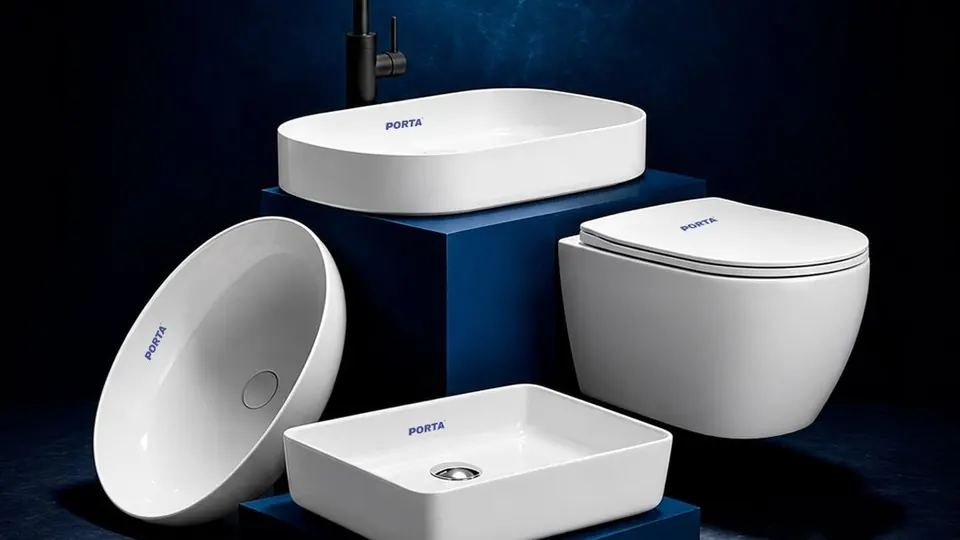
- Lifestyle and concept posters. A wall-hung commode framed inside a phone held between two hands, a basin and vessel sink on a deep blue plinth, a woman holding two tile samples against a bare wall.
- A tile gallery. The tile range stood upright like panels in a gallery, so a buyer sees grain and veining at a glance.
- Product films. Four short films: a commode film, a tap film, a Porta special edition film and a behind the scenes cut from the shoot.
The copy carried the same idea. One tile poster reads "Teen mahine se bus yahi do options?" with the line "Stop choosing between two. Explore a world of tiles." Another asks "Still calling it a complete bathroom without this duo?" Short, local, a little cheeky, and always about the buyer's home rather than the product's specification sheet.
We also made posters for the dates that matter to Pakistani audiences, such as a Jummah post and a Defence Day heritage post, built in the same visual language so the feed never drops out of character. You can see all nine posters and the films on the Hamid Enterprises case study.
The six formats a retail shop actually needs
The retail product photography kit
What we plan for on every product shoot, from white box to whole worlds.
You do not need all six on day one. For most retailers I would start with packshots of the best sellers, two or three lifestyle scenes and one short product film. That is enough for a month of posts and your first ads.
Same idea, different shelves
The approach is not specific to bathrooms. The same thinking runs through our other product clients.
Shan Electronics, Multan. An electronics store selling ACs, ovens, TVs and washing machines. Instead of posting supplier images, we placed the products into Multan's own streets and skyline, so a price post reads like a campaign. Summer heat campaigns and wedding season packages run on the same look. The case study holds 41 posters and campaign pieces.
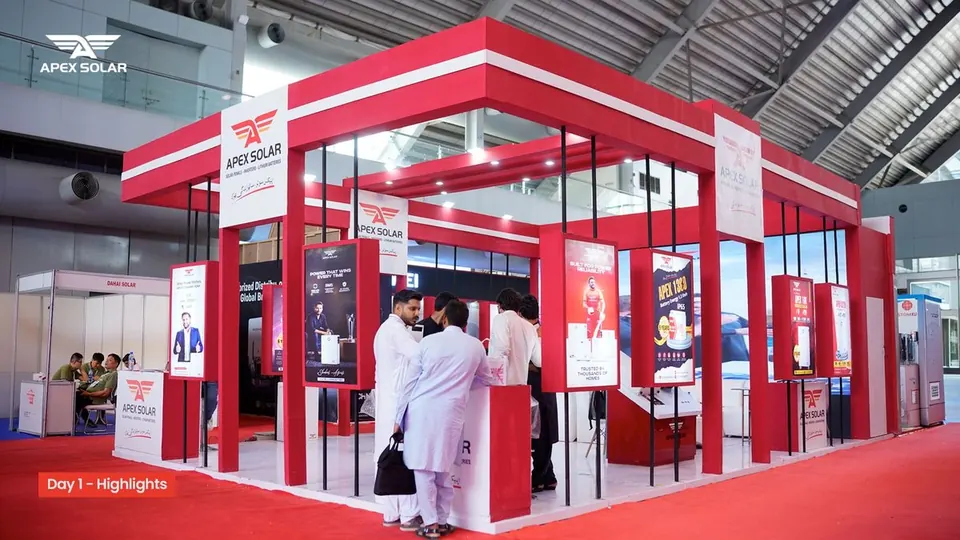
Apex Solar. Lithium batteries from 1300W to 16kW. Here the problem was a range of models that could easily look like different companies. We built a product design system: one sunlit room and one layout, so every model looks like the same trusted brand.
Shangrilla Can Cake. Food packaging is product photography too. Short films like the spoon test and "pick a flavour" were shot on the same set as the stills, which is the cheapest way to get reels and photos from one day.
How we run a product shoot, step by step
From brief to buy button
We lock the look on a test shot first, then shoot the whole range to that recipe.
The test shot is the step I would never skip. It costs very little and it settles the arguments early: how bright the white should be, whether the tap is shot from the front or at an angle, how much shadow sits under a basin. Once that recipe is approved, a range of fifty products can be shot in the same style without anyone second guessing it.
Mistakes I see retailers make with product photos
Reusing supplier images. Your competitors have the same files. If the photo is identical, the buyer compares on price alone.
A new angle every time. A feed where each product is shot differently looks like five shops, not one. Pick a recipe and stick to it.
Only shooting the product. Packshots sell to buyers who already want the item. Lifestyle scenes and short films create the want in the first place.
Ignoring video. On Instagram and Facebook, a fifteen second tap reveal can travel further than a perfect still. Shoot films on the same day, on the same set.
Forgetting where the files go. A marketplace needs a square on white, a story needs a vertical crop, a print catalogue needs high resolution. Plan the sizes before the shoot, not after.
What to take away
- Presentation decides premium. When products look alike, the photo is the difference.
- Shoot to one recipe. Consistent angles and lighting turn a shop into a brand.
- Mix packshots, scenes and films. Each does a different job in the funnel.
- Write copy for the buyer's home. Hamid's posters talk about bathrooms and choices, not model numbers.
- Approve a test shot first. It saves the whole shoot.
Our full range, the product films and the process are on the product photography service page. If the photos are going into a bigger brand refresh, our guide to brand identity design in Pakistan covers the system they should sit inside.
If you run a retail shop or a product brand and your feed looks like everyone else's, message us on WhatsApp. I am happy to look at your current photos and tell you what I would shoot first.
Want this for your brand?
Video, brand identity, Meta ads and social media, made in-house by our team in Multan. Tell us what you are building.

Founder of Digital Lineup, a content production and digital marketing agency in Multan, Pakistan. Four years of brand films, Meta ads, identities and social media for brands in Pakistan and Australia.